Find all the subdomains of a domain with Subdomains Lookup tools

Our subdomain finder tools allow you to discover the subdomains of any target domain to uncover potential attack entry points. Find systems that are less protected and thus more vulnerable to attacks.

500 free API requests. No credit card required.

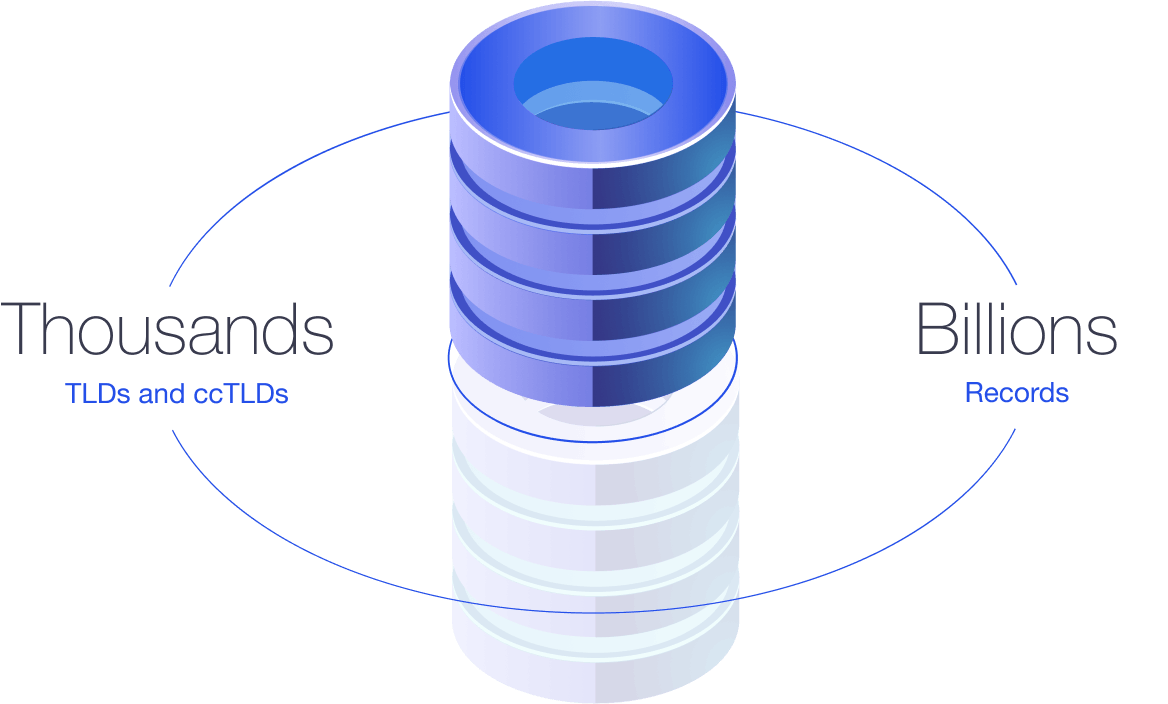
9.6 Billion+Subdomains
15 Million+Subdomains discovered daily
52,000+Satisfied customers
15+Years of data crawling

Our subdomain finder product line includes:

Lookup

Just take a domain name and instantly get a complete list of subdomains with relevant update dates.

Subdomains Lookup | WhoisXML API
Subdomains Lookup API | WhoisXML API

API

With one API call, get a list of all subdomains related to a given domain name to discover any company’s web infrastructure, including yours so you can reduce your potential attack surface.

Subdomains Data Feed

We provide a large subdomain repository with 9.6+ billion records updated weekly and available for download in the form of an exhaustive and well-parsed comma-separated values (CSV) file.

Subdomains Data Feed | WhoisXML API

Benefits of Subdomains Lookup

  • Based on up-to-date data

    Each subdomain search gives you a list of all the subdomains of a domain from a large database gathered in over a decade of data crawling and growing by over 15 million subdomains daily on average.

  • Quick results

    Just take a domain name and do an instant subdomain enumeration for any target domain.

  • Handy

    Don’t bother with manual subdomain research with the help of our handy and fast Subdomains Lookup API.

What is Subdomain Lookup?

A subdomain lookup tool, also known as a subdomain finder tool, helps identify subdomains associated with a domain name using passive DNS data. It can have different use cases like supporting cybersecurity research, spotting dangling records, and creating lists of possibly suspicious subdomain artifacts.

subdomain lookup

Do you know just how much big brands are affected by wild subdomain footprints?

Check our white paper “The Secret Life of Wild Subdomains” for an overview of the subdomain surface of 10 of today’s most spoofed brands.

Download white paper
Subdomains Lookup Overview | WhoisXML API

Get 500 free API credits. No credit card required.

Get started

Frequently Asked Questions

What is a subdomain?

A subdomain is a subdivision of a main domain name that helps organize and navigate different sections of a website. It functions as a separate address within the main domain but remains part of the same root domain. For example, in subdomains.whoisxmlapi.com, subdomains is the subdomain, whoisxmlapi.com is the primary domain name, and .com is the top-level domain (TLD).

What information will I receive from a subdomain lookup?

When you perform a subdomain lookup, the tool lists all subdomains of a domain name that it was able to discover. While no lookup tool can guarantee 100% coverage, ours is usually close. It will also show the dates when they were first seen and last updated.

How does the Subdomain Lookup work?

When a user queries the WhoisXML API’s Subdomain Lookup tool, the request is sent to a massive, precompiled database that was built over the course of more than 10 years through continuous passive subdomain discovery techniques, such as DNS record analysis and browsing SSL certificates and certificate transparency logs.

This subdomains database is updated daily to ensure that the data remains as accurate and fresh as possible, especially since the Subdomain Lookup is commonly used as a recon tool.

What makes the WhoisXML API’s Subdomain Lookup tool different?

WhoisXML API’s Subdomain Lookup stands out for its speed and accuracy. It returns a list of subdomains for any given root domain within a few seconds. In addition, the subdomain discovery tool uses a combination of techniques, including advanced algorithms and a regularly updated DNS records database, to provide a comprehensive list of subdomains. The subdomain data can be accessed through three different consumption models:

  • Subdomains Lookup API: this consumption model is designed for developers and technical users who want to integrate the API into their own applications, scripts, or workflows to perform large-scale, automated subdomain searches and retrieve the data in a structured format like JSON or XML. Subdomain Lookup API can now be accessed using your favorite LLM, with WhoisXML API’s MCP server. The same Subdomains Lookup API key is needed to set up the MCP server.
  • Subdomains Lookup GUI: this is a web-based and user-friendly platform where users can enter a domain name into the search bar, click the “Lookup” button, and view the results directly on the webpage.
  • Subdomains Database Download: this model is for users who require the entire dataset for offline analysis or integration into their internal systems. Instead of making individual queries, users can download the complete database of subdomains in a large CSV file.

Does the Subdomain Lookup Tool provide accurate data?

Yes, WhoisXML API provides highly accurate and regularly updated subdomain data, as it pulls information from multiple sources, including DNS records and certificate transparency logs.

Can I automate subdomain scans?

Yes, you can automate subdomain scans using the Subdomains Lookup API. The API responses are in JSON and XML formats, making the tool compatible with popular coding languages. Please check the API docs to see how to use the API in your workflows.

What can I do after I find subdomains?

After you find subdomains, you can use the information for various purposes. Here are a few things most organizations do with their subdomains list:

  • Asset management: Subdomain enumeration helps organizations find all subdomains of a domain, including forgotten or overlooked subdomains (e.g., shadow IT). This list is combined with other digital assets, allowing security professionals to map out attack surfaces for security assessments or bug bounty hunting.
  • Vulnerability scanning and penetration testing: Once you have a list of subdomains, you can start checking each subdomain for security issues, such as misconfigurations, outdated software, unpatched systems, and vulnerabilities. A forgotten or unmanaged subdomain can be a major entry point for attackers, and vulnerability scanners or penetration testers can uncover these weak spots.
  • Threat hunting: Security researchers and bug bounty hunters analyze subdomains for potential phishing campaigns or malicious activities. Subdomain takeover is a well-known technique used for impersonation, cookie theft, and phishing.
  • Website infrastructure management: Subdomain lookup can also be used for managing the website infrastructure since a subdomains list can help developers visualize how different services (e.g., blog., api., support.) are hosted and interconnected.

Trusted by
the smartest
companies

You may be interested

MAC Address API
MAC Address API

Get vendor information, detect virtual machines, manufacturer, location, read the information encoded in the MAC address.

Learn more
Reverse WHOIS
Reverse WHOIS

Find connections between various domains, individuals and organizations.

Learn more
Screenshot Service
Screenshot Service

Instantly get a screenshot of any web page.

Learn more
DNS Lookup Services
DNS Lookup Services

Identify who is hosting a particular domain name or website.

Learn more
Brand Alert
Brand Alert

Monitor exact matches, variations and common misspellings of your brand name & trademarks.

Learn more
Email Verification
Email Verification

Ensure the validity and quality of any email address.

Learn more
Subdomains Lookup
Subdomains Lookup

Discover subdomains related to the target domain name.

Learn more
Website Categorization

Define website category of the given domain.

Learn more
Reverse NS
Reverse NS

Find all domains that use the same name server.

Learn more
SSL Certificates API

Check a domain’s SSL certificate chain via API calls.

Learn more
MAC Address Vendor Database

Get the most comprehensive database of registered MAC address blocks, also referred to as OUIs (Organizationally Unique Identifiers).

Learn more
Registrant Alert
Registrant Alert

Find out which domains were added or dropped by registrants, with given search criteria.

Learn more
Domain Research Suite

Enhance your domain research toolkit by our enterprise-grade web-based solution that helps you in searching...

Learn more
Domain Reputation API

Assess the domain's or IP addresses reputation and risk profile with a simple score based on a comprehensive...

Learn more
Threat Intelligence Data Feeds

Get the most relevant data to be ahead of emerging security threats.

Learn more
Newly Registered Domains

Keep track of the best business opportunities online.

Learn more
Reverse DNS
Reverse DNS

Give the list of domain names tied to the specified DNS records via API calls with outputs in JSON and XML.

Learn more
Domain Availability
Domain Availability

The most accurate domain availability checker offered on the market.

Learn more
Reverse IP
Reverse IP

Find relations like ownership between hostnames and IPs.

Learn more
Domains & Subdomains Discovery API

Find domains and subdomains related by specific terms in their hostnames.

Learn more
Newly Created Websites Data Feed

Get insights for the new business registered on the web.

Learn more
Typosquatting Data Feed

Easily detect all typosquatting domain names as soon as they are registered each day.

Learn more
WHOIS Database Download

We provide complete and relevant domain WHOIS data which can be customized and easily integrated as per your business needs.

Learn more
Reverse MX
Reverse MX

Reveal all the domains that use the same mail server.

Learn more
SSL Certificates Database

Get the most comprehensive database of SSL (Secure Sockets Layer) Certificates.

Learn more
Domain Registration Streaming

Get data feeds of new registered domains along with their WHOIS data generated in real time.

Learn more
WHOIS Search
WHOIS Search

Get well-parsed and normalized WHOIS information for any domain name, IP address or email.

Learn more
IP Geolocation
IP Geolocation

Find out the exact physical location of any IP address, email or domain name.

Learn more
Real-time SSL Certificates Streaming

Get data feeds of SSL certificates along with their well parsed fields in real time. Accurate. Up-to-date.

Learn more
Threat Intelligence API

Easily identify malicious resources and retrieve their threat information.

Learn more
IP Netblocks
IP Netblocks

Find out which IP range the particular IP belongs to.

Learn more